Equipment

Approach Wedge Loft and Distance: The A-Wedge Explained
48–52 Degrees, 85–100 Yards — and Why the Stamped Number Means Nothing Alone
September 5, 2026 · 7 min read · Stephen Pickering
48–52 Degrees, 85–100 Yards — and Why the Stamped Number Means Nothing Alone
September 5, 2026 · 7 min read · Stephen Pickering
Key takeaway: An approach wedge is 48–52° and it is the same club as a gap wedge, A-wedge or utility wedge. It exists because pitching wedges got stronger — Titleist’s T200 and T350 pitching wedges are 43° — leaving twelve degrees to a 56° sand wedge. Check your pitching wedge loft before you buy: a 43° PW wants a 48, not the 52 on the shelf.
The short answer: an approach wedge loft is 48 to 52 degrees, most often 50 or 52, and it goes 85 to 100 yards for a typical amateur. It is also the same club as a gap wedge — approach wedge, A-wedge, attack wedge, utility wedge and gap wedge are five names for one club, and the letters are a marketing decision rather than a design one.
That is the answer most people came for. The more useful thing is this: the loft stamped on your approach wedge tells you almost nothing on its own. It only means something next to the loft of the club above it, and that is where most bags are quietly broken.
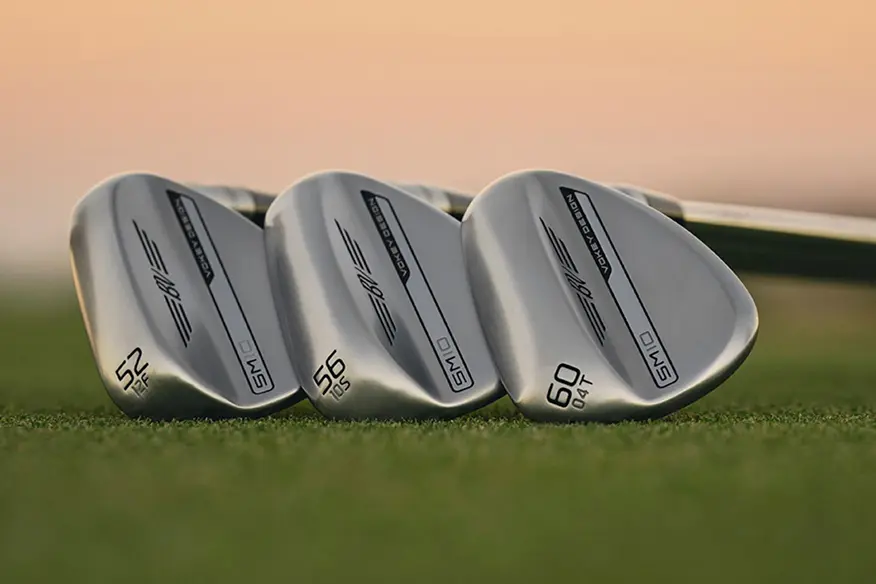
If your iron set came with a club marked A, U or G sitting between the pitching wedge and the sand wedge, that is your approach wedge. Titleist, TaylorMade, Callaway and Ping all label it differently, and every one of them is describing the same slot in the bag: the club that fills the space a modern pitching wedge has opened up.
Typical lofts:
| Club | Common loft |
|---|---|
| Pitching wedge (PW) | 43–48° |
| Approach / gap wedge (AW, GW, A, U) | 48–52° |
| Sand wedge (SW) | 54–56° |
| Lob wedge (LW) | 58–60° |
The 48 to 52 range is wide for a reason, and the reason is the club above it.
For decades a pitching wedge was around 48 degrees. A sand wedge was 56. Eight degrees apart, one club’s worth of gap, nothing needed in between — which is why your dad’s set does not have an A-wedge in it.
Then manufacturers started strengthening iron lofts to sell distance. A pitching wedge in a modern game-improvement set can be 41 to 43 degrees. Titleist’s T150 pitching wedge is 44 degrees; the T200 and T350 are 43. Against a standard 56-degree sand wedge that is a gap of twelve or thirteen degrees.
Twelve degrees is not a gap. It is a hole. In yardage terms it is somewhere around 30 to 40 yards of your scoring range with no club assigned to it — and it sits at exactly the distance from which you are trying to hit greens.
The approach wedge was invented to patch a problem the equipment industry created. That is not a criticism, it is just worth knowing, because it explains why the right loft for you depends entirely on what is stamped on your pitching wedge.
Every wedge, every loft, and the full distance table:
Golf Wedge Distances Chart →| Swing | Typical amateur | Longer hitter |
|---|---|---|
| Full | 85–100 yds | 110–125 yds |
| Three-quarter | 70–85 yds | 90–105 yds |
| Half | 55–65 yds | 70–85 yds |
Two things about that table. First, it is an average, and you do not play golf against an average — you play against a flag 94 yards away.
Second, and more importantly, the full-swing number is the least useful row. A full approach wedge happens perhaps twice a round. The three-quarter and half figures are the shots you actually face when you have missed a green or laid up, and almost nobody knows theirs. That is why so many wedge shots finish pin-high-and-nowhere or fifteen yards short — the club was right and the swing length was a guess.
Do this before you buy anything.
A 43° PW with a 52° AW leaves nine degrees between them, which is another blind spot in miniature. Most golfers buying an approach wedge default to 52 because it is the most common shelf loft, and half of them should be buying a 48.
Loft charts get you to the right club. They cannot get you to the right yardage, because your yardage depends on your swing speed, your strike, your ball and the turf you play off.
The method the tour uses is the clock system, and it is the single most useful hour you can spend with a wedge. Take your approach wedge and hit ten shots with your hands finishing at 7 o’clock. Record the average carry. Repeat at 9 o’clock, then 10 o’clock. You now have three known numbers with one club instead of one vague number and a lot of hope.
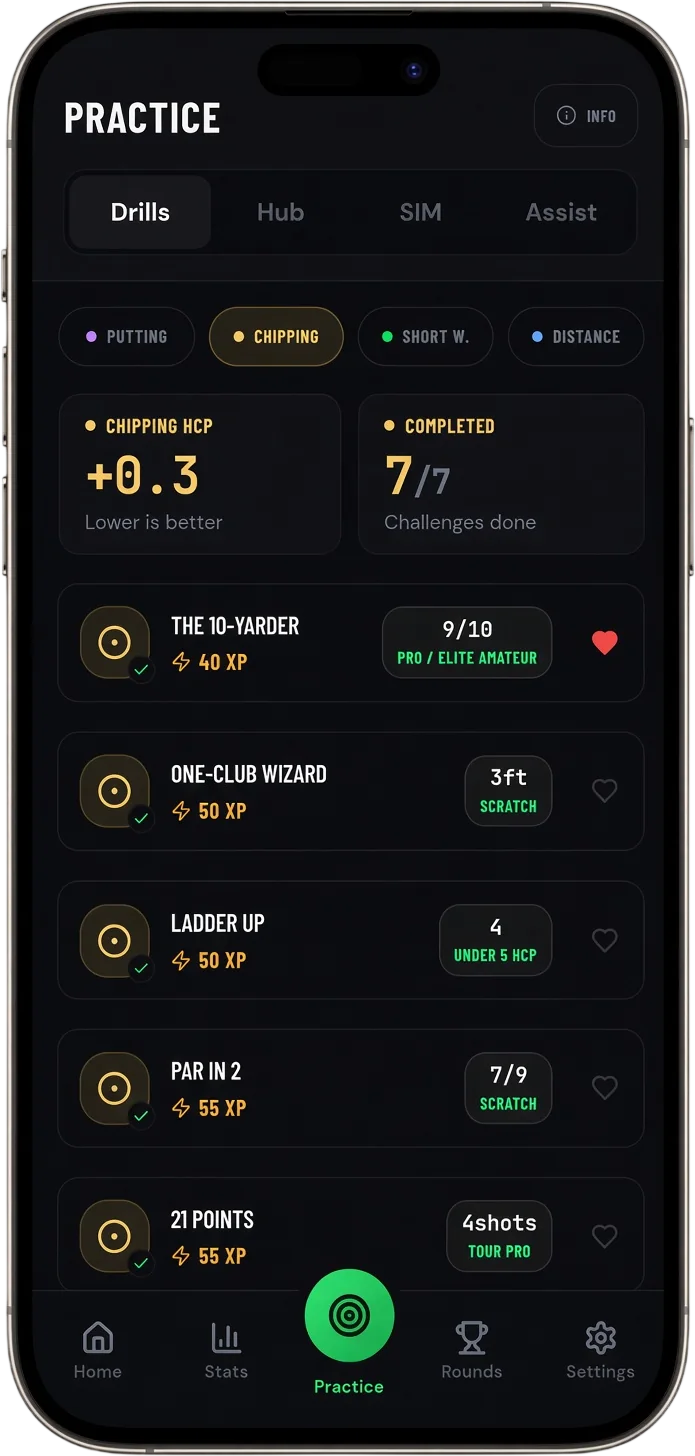
Scoring Zone’s Practice Assistant has that clock system built in for gap, sand and lob wedge, so the yardages get stored rather than written on the back of a scorecard and lost. Dial-In 20 in the SIM Lab does the same job on a launch monitor if you have access to one.
What the whole set is for, and how the names break down:
Golf Clubs: Types and Names Explained →The approach wedge is not only a 90-yard club. For a lot of golfers it is the best chipping club in the bag — enough loft to carry a fringe, little enough to release and run like a putt, and far more forgiving than trying to flop a 60 at everything.
If you are chipping with a lob wedge by default because that is what you have seen on television, try nine shots with the approach wedge instead. Land it a third of the way, let it run two-thirds. The strike gets easier immediately.
The percentage play from around the green:
How to Get Up and Down in Golf →An approach wedge is 48 to 52 degrees. It is the same club as a gap wedge. It goes 85 to 100 yards full for most amateurs, and it exists because pitching wedges got stronger and left a hole in the bag.
Check your pitching wedge loft before you buy one — that number, not the shelf, decides whether you need a 48 or a 52. Then go and measure what you actually hit it at three swing lengths, because the club only helps once you know the yardage. Most golfers own the right wedge and have never found out what it does.
Write the three numbers down somewhere you will still have them in April. Scoring Zone stores them against the club so you can see them move as your strike improves, but a note in your phone beats the back of a scorecard, and both beat guessing.
Typically 48 to 52 degrees, with 50 and 52 the most common on the shelf. It is the same club as a gap wedge, an A-wedge, an attack wedge or a utility wedge — manufacturers stamp different letters on the same slot in the bag. If your set has an A or a U between the pitching wedge and the sand wedge, that is it.
A typical amateur hits it 85 to 100 yards full, 70 to 85 at three-quarters and 55 to 65 at half. Longer hitters are nearer 110 to 125 full. The three-quarter number is the one worth knowing, because that is the shot you actually face — a full approach wedge comes up maybe twice a round.
Yes, exactly the same club. Approach wedge, gap wedge, A-wedge, attack wedge and utility wedge are five names for the club that fills the space between the pitching wedge and the sand wedge. The naming is a manufacturer decision, not a design difference — just check the actual loft on the sole or the spec sheet.
Stop guessing at swing length. Hit ten shots with your hands finishing at 7 o’clock, ten at 9 and ten at 10, and record the average carry for each. That gives you three known yardages from one club instead of one full-swing number you rarely use. Log them and check them again in a month — wedge distances move with your strike, and the golfers who hit it close are the ones who know their numbers rather than feel them.
7 days free
Then from $4.99/month · Cancel anytime
Start your 7-day free trial
35+ drills & tests · Short Game Handicap · Performance tracking