Training Aids
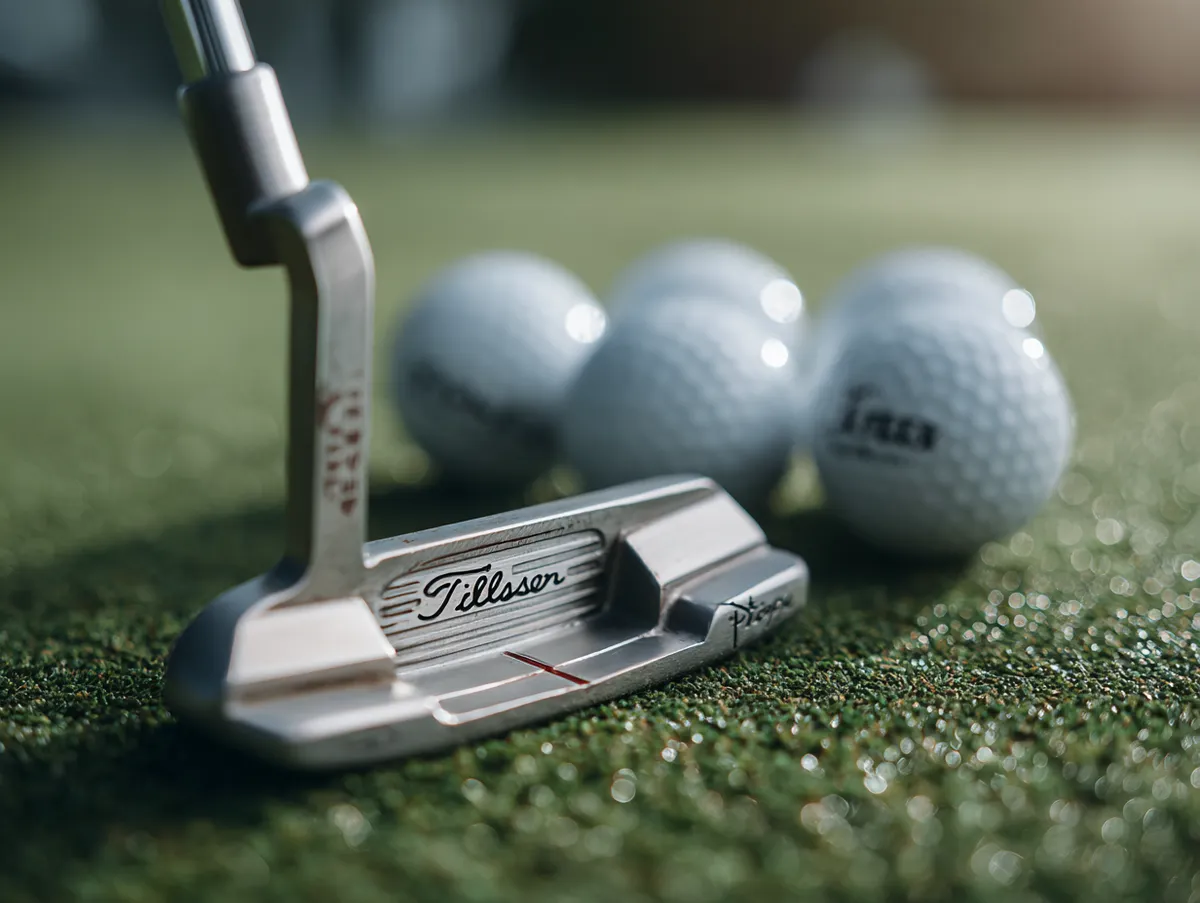
Putting Training Aid Review: 5 Options Tested — Which One Is Worth It?
Honest Pros, Cons, and Who Should Buy What
April 13, 2026 · 9 min read · Stephen Pickering
Honest Pros, Cons, and Who Should Buy What
April 13, 2026 · 9 min read · Stephen Pickering
Key takeaway: Most putting training aids fix your stroke but won’t tell you if you’re improving. The best setup: a physical aid for feedback (PuttOut or Wellputt) paired with scored, tracked practice drills so you can see progress over time.
The market for putting training aids has never been bigger. And most of it is fine. The PuttOut is genuinely useful. The Wellputt Mat is excellent. The Eyeline Mirror is cheap and does what it says. But here’s the thing no putting training aid review ever talks about: the aid itself isn’t the problem. The problem is that you buy it, use it a few times, then go back to guessing whether your putting is improving.
This is a proper putting training aid review — five options, real pros and cons, honest verdicts. Physical aids, digital tools, and what actually fills the gap between buying something and getting better. PGA Tour pros average around 29 putts per round. Most amateurs are at 36–40. The difference isn’t equipment. It’s practice structure.
Physical putting aids are almost universally good at one thing: technique correction. They fix your stroke path, your face angle at impact, your alignment. That’s valuable — especially early in your development as a putter.
What they can’t do is tell you whether your distance control has improved from last Tuesday. They can’t track how many three-putts you had in today’s session versus the last one. They can’t benchmark your 20-foot make percentage against where you were three months ago.
PGA Tour pros three-putt only 0.5 times per round. A 15-handicapper averages 3.2 three-putts. From 11–30 feet, amateurs are seven times more likely to three-putt than a tour player. The gap isn’t in their grip — it’s in how consistently they practise, and how ruthlessly they track it.
So. The aids. Here they are.
The PuttOut is a convex white target you putt into. Hit it flush and the ball rolls back to you perfectly. Hit it off-centre and it tells you immediately. Hit it too hard and the ball rolls back past you. Too soft and it doesn’t return at all.
It’s a brilliant piece of kit for what it does. The feedback is instant. You can use it indoors or out. It costs around £35–£40. For working on a short-range stroke — particularly face angle and contact quality — it’s one of the most satisfying tools available.
Pros: Immediate strike feedback. Portable. Inexpensive. Forces a committed stroke. Cons: Designed for short putts only. No distance work. No way to track progress over sessions. Best for: Golfers who struggle with short putt confidence (sub-10 feet). Good for pre-round warm-up routines too. Rating: 8/10
If you want short-range pressure built into a scored drill, the Five-Foot Circle challenge in Scoring Zone is built for exactly this — make 10 in a row from 5 feet, with a timer. The pressure is real.
How to Stop Three Putting →The Wellputt Mat is the most complete putting practice aid on the market. It comes in 3m and 6m lengths. It has lines printed on the surface for alignment, distance markers, breaking putt guides, and a regulated surface speed. It genuinely replicates a real green well.
The design is intelligent. You can see immediately whether the ball tracks on your intended line. You can see your distance control from specific yardages. And the premium models come with a smartphone app integration.
The price is the catch. You’re looking at £100–£200 depending on length and model. That’s not unreasonable for the quality, but it’s a commitment.
Pros: Best stroke alignment feedback available. Distance markers built in. Consistent surface speed. Premium feel. Cons: Expensive. Large — needs dedicated space. Doesn’t score or track sessions. Best for: Mid-handicap golfers who practise at home regularly and want to commit properly to putting improvement. Rating: 9/10
This is the one every golf coach keeps in their bag. It’s a mirror, roughly the size of a putting mat section, with alignment guides etched into it. You set it on the green, address the ball, and you can see immediately whether your eyes are over the ball and whether your shoulders are square.
At around £20–£30, it’s the best value putting aid available. No tech, no app, no subscription. Just instant visual feedback on the two things most amateurs get wrong at setup.
The limitation is clear: it only fixes your setup. Once you stroke the putt, the mirror has nothing more to tell you. And setup is just one variable.
Pros: Cheapest effective aid on the market. Instant visual feedback. Lightweight and portable. Used by PGA pros. Cons: Only addresses setup — not stroke path, distance control, or outcome. No tracking, no progression. Best for: Beginners and high-handicappers who suspect their setup is causing inconsistency. A good first purchase before investing in anything more. Rating: 7/10
Distance control is the most underworked putting skill at every handicap level. Here’s a full guide to fixing it.
How to Improve Putting Distance Control →PuttView is a projector system used by tour players and performance academies. It projects lines and targets directly onto the green surface — break visualisation, aim lines, target zones. It’s used by players like Viktor Hovland and is genuinely impressive technology.
It’s also priced accordingly. A PuttView system runs into the thousands. This isn’t a consumer product — it’s a performance tool for serious practitioners or coaches.
Pros: Exceptional for visualising break. Real-time data. Used at the highest level of the game. Cons: Cost makes it inaccessible for the vast majority of golfers. Requires a dedicated setup. Best for: Professionals, serious amateurs with coaching setups, or golf academies. Not a household purchase. Rating: 9/10 (for those who can access it)
Every physical aid above solves a technique problem. Scoring Zone solves a different problem: accountability.
The putting drills in Scoring Zone are scored, timed, and benchmarked. The Lag King drill — 10 putts from 40 feet, scored on how many finish within 3 feet — gives you a repeatable number you can track week on week. The Five-Foot Circle forces you to make 10 in a row from 5 feet inside a 15-minute timer. The Clock Drill puts 8 balls in a circle at 6 feet and makes you complete the circuit without a miss.
These aren’t informal sessions. Every drill produces a score. Every score logs to your history. You can see whether your lag putting benchmark has moved. You can see whether your pressure make percentage from short range is climbing. That’s the information the physical aids don’t give you.
Make percentages by distance paint a clear picture: 3 feet at 96%, 5 feet at 77%, 10 feet at 40%, 15 feet at 25%, 20 feet at 15%. The Speedmaster drill in Scoring Zone benchmarks your distance control from 30 feet — 10 putts scored on proximity — so you can see exactly where you sit relative to those numbers.
Pros: Fully scored and tracked. Benchmarks across multiple drill types. Works alongside physical aids — not instead of them. Free to start. Cons: Requires a device on the course or practice green. Physical feedback on technique isn’t built in. Best for: Any golfer who has bought a training aid and isn’t sure whether it’s working. Also ideal as the structured layer that sits on top of whatever physical aid you already own. Rating: 9/10
See how golfers are using structured drill tracking to identify and close specific putting gaps.
Best App to Improve Putting →Here’s a simple framework based on where you are right now.
You’re a high-handicapper (18+): Start with the Eyeline Putting Mirror. Fix your setup first. It costs £25. Once your alignment is consistent, add the PuttOut for short-range stroke feedback.
You’re a mid-handicapper (8–17): The PuttOut or Wellputt Mat is your best investment. The PuttOut if you want portability; the Wellputt if you practise at home and want the most complete feedback surface. Layer structured putting drills on top to actually track whether the investment is paying off.
You’re a low-handicapper (0–7): You already know what your stroke looks like. The problem is distance control under pressure and consistency in scored practice. The Wellputt Mat gives you the surface. Scoring Zone’s putting drills give you the benchmarks. That combination is where real improvement comes from.
You want one free starting point: Open Scoring Zone, run the Lag King drill, and record your score. That’s your baseline. Everything you buy after that should be improving it.
The biggest waste in putting practice isn’t buying the wrong aid. It’s buying a good one and never measuring whether it’s working.
For most amateurs, the PuttOut Pressure Putt Trainer or a putting mat like the Wellputt gives the most immediate feedback on stroke quality. Pair either with a structured practice app to track whether you’re actually improving over time. Technique fixes without tracking rarely stick.
Yes — but only if you use them consistently and track your progress. A putting practice aid fixes technique in the short term. What keeps the improvement is structured, scored practice that shows you whether your numbers are moving week to week. The aid is the tool; consistency is the method.
The Wellputt Mat is widely regarded as the best putting mat for home use. It includes alignment lines, distance markers and a calibrated surface speed. It’s the most complete putting mat on the market and worth the investment if you practise at home regularly.
Track your numbers. Log three-putts per round, putts per round, and proximity from different distances. Scored putting drills make this automatic — every session produces a number, and you can see your benchmark move over time. Without data, it’s just guessing.
Stephen Pickering
3-handicap golfer with 25 years on the course. Built Scoring Zone to bring structure and pressure to short game practice. Writes about what actually works from the practice green, not the press box.
Scoring Zone’s putting drills are scored, tracked, and benchmarked — so you can see exactly how your putting is improving session by session.
Download Scoring Zone Free →Full access to all drills, stats, and features. No credit card required — then from $4.99/month.
Get Scoring Zone Free →