Practice & Improvement

How to Stop Three Putting
7 Drills That Actually Work
March 17, 2026 · 8 min read · Stephen Pickering
7 Drills That Actually Work
March 17, 2026 · 8 min read · Stephen Pickering
Key takeaway: 90% of three putts come from poor distance control on lag putts, not from missing the line. The 7 most effective drills to stop three putting are: the lag ladder, the gate drill, the clock drill, the 3-2-1 pressure test, the speed zone, the living room ladder, and the 100-putt challenge. Most golfers see results within 2–3 weeks of consistent practice.
Three putts don’t just cost you strokes. They cost you momentum, confidence, and the round you were building. If you’ve ever wondered why am I bad at putting, the answer is almost always the same: distance control. Most golfers aim at the hole and hope the speed takes care of itself. It doesn’t.
The good news? Three putting is one of the easiest problems to fix — if you practise the right way. Here are 7 drills that target the exact skills most golfers neglect.
Ninety percent of three putts come from lag putts finishing too long or too short — not from missing the line. Most golfers instinctively focus on aim: they read the break, set up square, and stroke it. But if the ball finishes six feet past the hole or four feet short, the read becomes irrelevant. Putting distance control is the skill that eliminates three putts, and it’s the one most golfers never deliberately practise.
From 30 feet, a tour pro aims to leave the ball within 3 feet — a zone, not a point. The difference between a one-putt and a three-putt at that distance is almost always speed, not direction.
On the course there’s consequence — a missed three-footer costs you a stroke, costs you momentum, costs you the hole. On the practice green there’s nothing on the line. You can miss ten in a row and walk away. That gap between practice and performance is exactly why most golfers’ putting doesn’t improve no matter how many balls they roll.
Pressure putting drills fix this by building stakes into practice. When something is on the line — a target score, a consecutive make requirement, a restart for a miss — your brain engages the way it does on the course. That’s where real improvement happens.
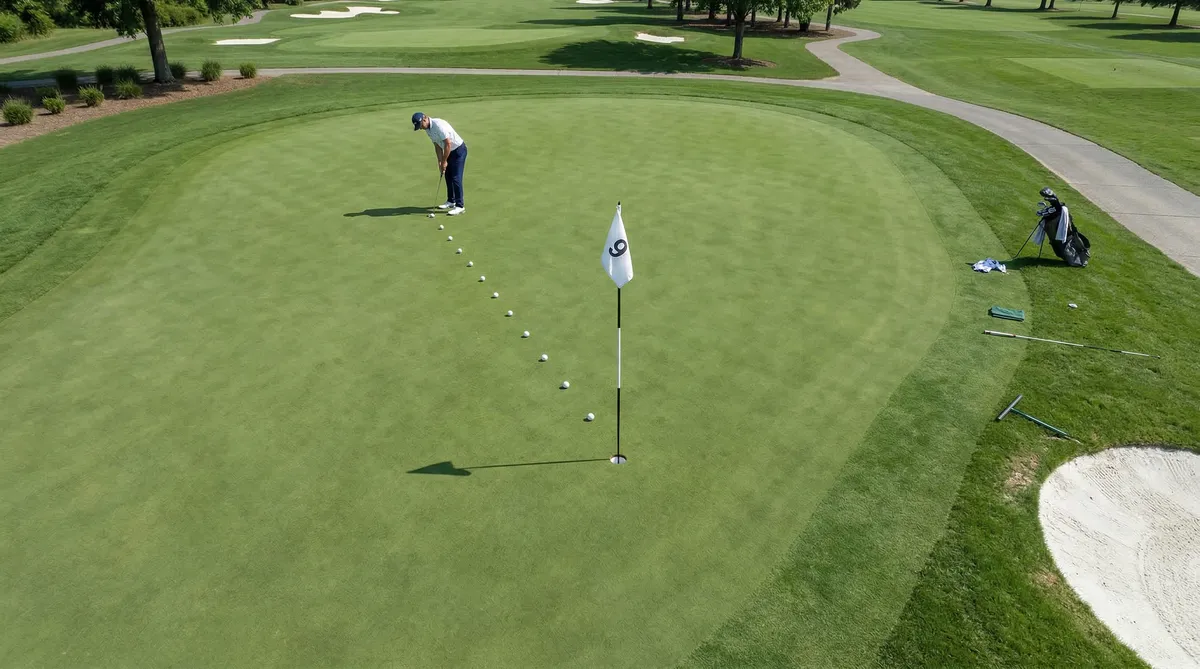
Set up at 20, 30, and 40 feet from the hole. Your goal isn’t to make the putt — it’s to finish within a 3-foot circle. Putt to a zone, not a point. Hit five putts from each distance and score yourself: 1 point for finishing inside 3 feet, 0 for outside. Target score: 12 out of 15.
This is the most direct lag putting drill you can do. It rewires your focus from line to speed — which is where the real problem is.
Place two tees just wider than your putter face, about 6 inches in front of the ball on the intended line. From 3–5 feet, make 10 putts through the gate without touching either tee.
This trains starting line accuracy without worrying about distance — the simplest way to build a repeatable stroke for short putts. When you combine a consistent stroke with better distance control, the three putts disappear.
Place four balls around the hole at 3 feet — at 12, 3, 6, and 9 o’clock. Make all four without missing. If you miss one, start over.
The variety of angles forces you to handle breaking putts in both directions. The consecutive requirement builds pressure with every putt you make. It’s a simple drill with a surprisingly high ceiling — even tour players include it in their warm-up routines.
Set up at 3, 6, and 10 feet from the hole. You need to make 3 putts from 3 feet, then 2 from 6 feet, then 1 from 10 feet — all in sequence without a miss. Miss any putt and you restart from the beginning.
This is one of the most effective pressure putting drills because the stakes build with every make. By the time you’re standing over the 10-footer, you’ve already made five in a row. That’s where the real pressure kicks in — and where the improvement happens.
Want scored versions of these drills with automatic tracking?
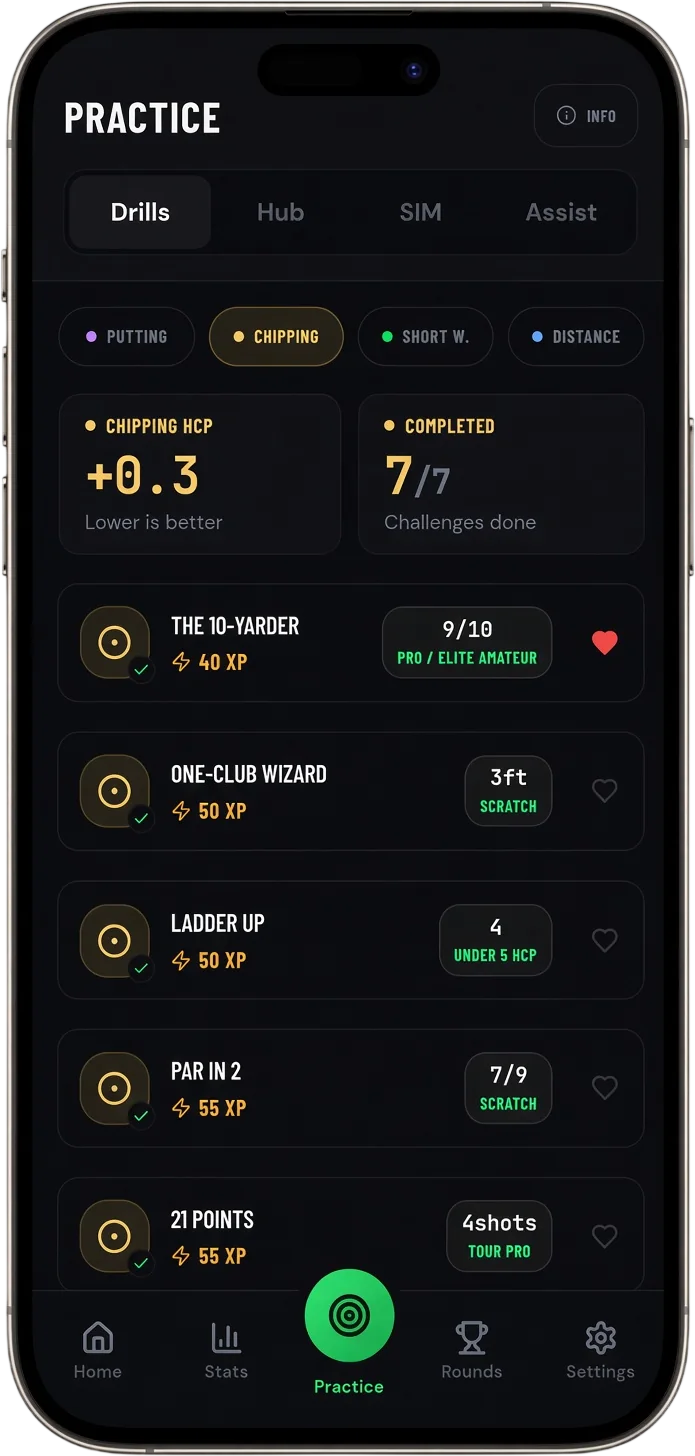
See Putting Drills →Place a towel 30 feet away and putt to it. The ball must stop on the towel — not past it, not short of it. Hit 10 putts and track how many land on target.
This drill builds lag putting feel faster than any other because it removes the hole entirely. There’s no temptation to focus on direction. Pure speed. Once you can land 7 out of 10 on a towel at 30 feet, your three-putt rate will drop noticeably.
Place a coin or upturned cup on a flat section of carpet. Putt to it from 5, 10, and 15 feet using a book or rolled-up towel as a backstop. Three putts from each distance, scoring yourself on proximity.
You won’t replicate green speed at home, but you will build stroke consistency and the habit of distance-focused practice. If you want to know how to practice putting at home without a green, this is the answer — 15 minutes on carpet is better than 15 minutes of aimless putting at the club.
Hit 100 putts from a mix of distances — 10, 20, 30, and 40 feet — tracking makes and proximity scores as you go. Add up your total score at the end.
This is an endurance drill as much as a skill drill. It builds focus over a full session, gives you a total score to beat next time, and covers every distance in one round. If you’re looking for the best putting drills to lower your scores, this one shows you the full picture of where your putting stands — and gives you something measurable to improve on.
Knowing the drills is the easy part. The harder part is building a consistent practice habit that actually moves the needle.
Twenty minutes three times a week beats two hours once a month — every time. Short, focused sessions with a clear goal produce better results than long, unfocused ones. The science on this is clear: spaced practice builds more durable skill than massed practice.
Mix your drill types. Blocked practice — repeating the same drill until you get it right — builds confidence and short-term technique. Random practice — rotating between different drills each session — builds adaptability and transfers better to the course. Both have a place. A good putting routine includes a bit of each.
The key is having a structured golf putting practice routine that tells you what to do each session — so you don’t waste time deciding, and so you’re not always defaulting to the comfortable drills you’re already decent at.
You can do all seven drills consistently and still not know if you’re improving — unless you track the data. How many three putts per round? What’s your average first-putt proximity? Which distance gives you the most trouble? Without answers to these questions, you’re practising on feel and hoping something changes.
This is where most golfers give up. They feel like they’re getting better but can’t point to anything that proves it. A putting tracker gives you that proof — and more importantly, it tells you which drills to prioritise next.
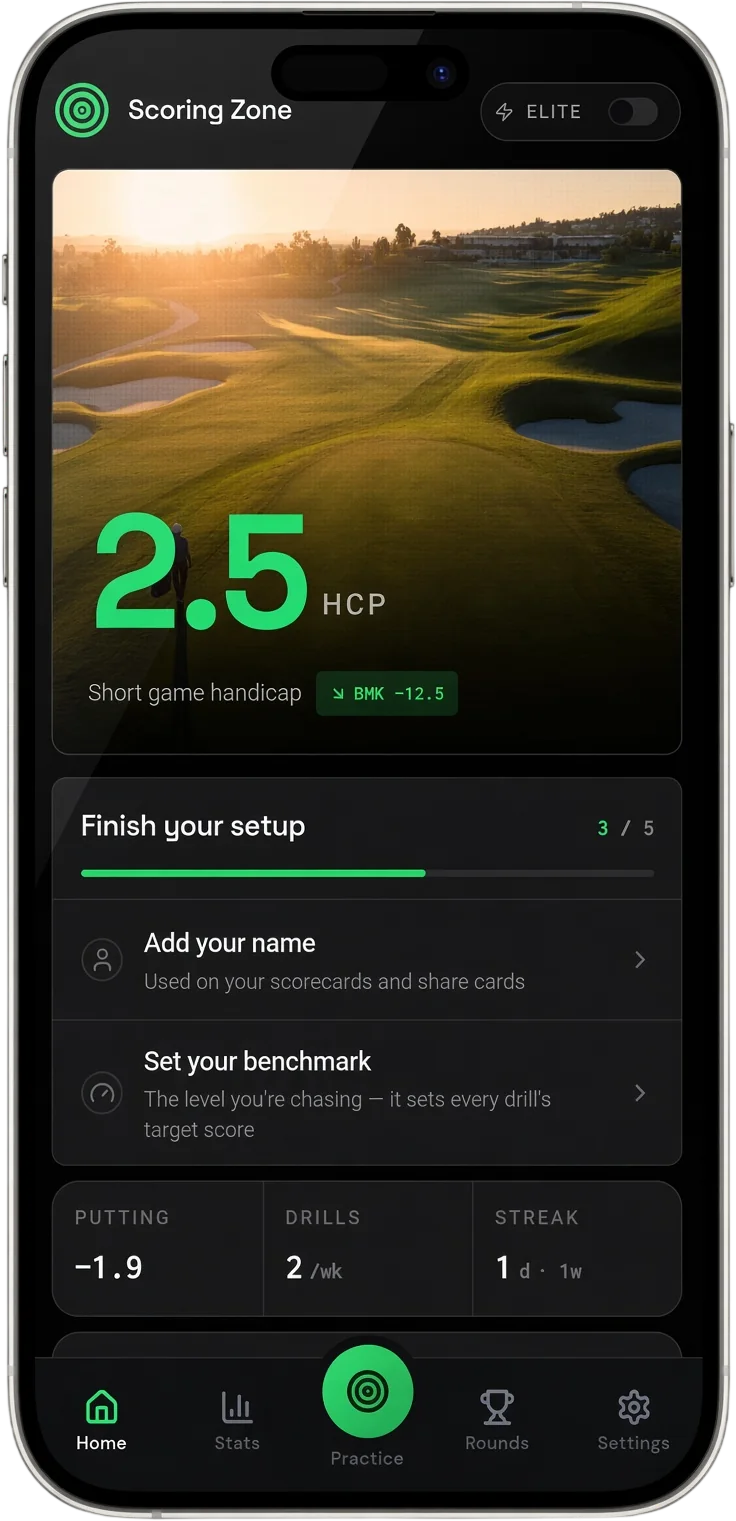
Scoring Zone’s putting performance test takes this further. It runs you through a full structured assessment across distances and conditions, calculates your Putting Handicap, and shows you a breakdown of exactly where your putting is strong and where it’s costing you strokes. It’s the fastest way to know whether your practice is working — and what to focus on next if it isn’t.
See how your putting stats trend over time.
Round Stats →Most golfers see a noticeable drop in three putts within 2–3 weeks of consistent, scored practice. The key isn’t time — it’s structure. Random putting practice won’t fix it. Drills that target distance control and pressure situations will.
Poor distance control on the first putt. Most three putts happen because the lag putt finishes 6 or more feet short or long — not because the golfer missed the line. Fix your speed, and three putts become rare.
Yes. A flat carpet and a coin or cup is enough for gate drills, speed drills, and short putting practice. You won’t replicate green speed, but you’ll build stroke consistency and confidence that transfers to the course. The Living Room Ladder drill above is a good starting point for how to practise putting at home.
Lag putting ladders, pressure tests like the 3-2-1 drill, and the 100-Putt Challenge. Any drill that scores your performance and forces you to focus on distance control will directly reduce three putts and lower your scores. The most important thing is that your practice has a measurable outcome — not just balls rolling toward a hole with nothing on the line.
Read the complete guide to improving your putting.
The Complete Putting Guide →7 days free
Then from $4.99/month · Cancel anytime
Start your 7-day free trial
35+ drills & tests · Short Game Handicap · Performance tracking