Training Aids

Golf Training Aid Review: What Actually Works (And What’s a Waste)
Putting, chipping, alignment and full-swing aids reviewed honestly
May 5, 2026 · 9 min read · Stephen Pickering
Putting, chipping, alignment and full-swing aids reviewed honestly
May 5, 2026 · 9 min read · Stephen Pickering
Key takeaway: Most golf training aids fix one fault, give two weeks of feedback, then sit in the cupboard. The few worth buying — alignment sticks, an impact bag, a putting mirror, a PuttOut — are cheap and focused. Pair them with scored drills so you can prove they’re working.
Walk through any golf shop and you’ll see fifty training aids promising to fix your slice, square your face, and drop your handicap. Most of them won’t. A few are genuinely brilliant — but only if you use them properly. This golf training aid review separates the tools that move the needle from the gimmicks that gather dust in the garage.
We’ve grouped the aids by what they actually train: putting, chipping, alignment, and full-swing. For each one, you get a plain-English verdict on what it does well, where it falls short, and what it costs to find out. We’ll also cover where a digital drill app does the same job better — and where the physical tool is still the right answer.
A small ramp that returns putts hit at the perfect speed and rejects everything else. Around £25.
What it does well: forces you to hole putts at the speed that goes 17 inches past — Dave Pelz’s optimal pace. The instant feedback is what makes it work. If your putt comes back, the speed was right. If it didn’t, you missed.
Where it falls short: it’s a single drill. After two weeks you’ll have learned what optimal pace feels like and the aid stops adding value.
Verdict: worth the £25 for the first month, then it sits in a drawer.
Premium putting mats with marked distances, breaks, and target zones. £100–£250.
What it does well: gives you a real surface at home with built-in targets for distance control. Wellputt mats roll close to tour-spec speed, which transfers far better than carpet practice.
Where it falls short: still just a flat strip. You can’t simulate breaking putts, real grain, or anything beyond 14 feet on most mats.
Verdict: the best of the physical putting aids. If you have a winter season or limited green time, it pays for itself.
A small acrylic mirror with alignment lines for eye position, shoulder square, and putter face. £15–£40.
What it does well: fixes the most common setup mistake — eyes inside the line, which causes pulled putts. Quick to use, easy to pack.
Where it falls short: it’s a setup tool only. Doesn’t help with stroke or speed.
Verdict: cheap, useful for two weeks, then graduate to scored drills.
A pop-up target net for backyard chipping. £20–£60.
What it does well: gives you a target that isn’t a flowerbed. Useful for groove and rhythm work when you can’t get to a course.
Where it falls short: doesn’t simulate spin, roll-out, or any of the variables that actually matter on a real green. A chip that lands in the net could be 30 feet past the pin in real life.
Verdict: fine for younger kids and rainy-day swings. For real chipping improvement, you need a green and a flag.
Sticks or hinged training shafts that promote shaft lean, weight forward, and a descending strike. £15–£90.
What it does well: physically forces a better impact position. If you flick at chip shots, these aids stop the flick.
Where it falls short: don’t fix the underlying motor pattern. The moment you take the aid away, old habits return unless you’ve also done scored, real-shot practice.
Verdict: useful as a 5-minute primer before a chipping session. Not a substitute for actual short game reps.
The fastest way to lock in better chipping is scored chipping challenges with benchmarks — same shot, real targets, repeatable scoring.
See Chipping Drills →Specialty clubs designed to enforce a specific impact (Tour Striker = ball-first contact) or swing path (plane trainers like the Hanger or Sure Set). £70–£200.
What it does well: physical feedback teaches you what proper impact and plane feel like. Faster than slow-motion drills for some golfers.
Where it falls short: there are dozens of these and most do similar things. You’ll usually find one that “clicks” and the others won’t.
Verdict: pick one based on your specific fault, not the marketing. If you don’t know your fault, a launch monitor session with a coach is a better £100 spend.
A heavy padded bag you slap into with a wedge or short iron to feel proper impact position. £30–£60.
What it does well: builds the physical sensation of forward shaft lean and a firm lead side. Cheap, durable, surprisingly effective.
Where it falls short: doesn’t transfer if you don’t follow it with real ball-striking practice.
Verdict: one of the few full-swing aids worth keeping long-term.
Two fibreglass sticks. Around £15 a pair.
What it does well: everything. Alignment, swing path, ball position, shoulder line, foot line, takeaway plane.
Where it falls short: nothing. They’re £15 and the most useful piece of practice equipment you’ll ever own.
Verdict: buy them. The single best value training aid in golf.
Most physical training aids fix a single fault. They don’t track your improvement, score your performance, or tell you when to move on. After a couple of weeks, the feedback they give you stops being useful — and they sit in the cupboard.
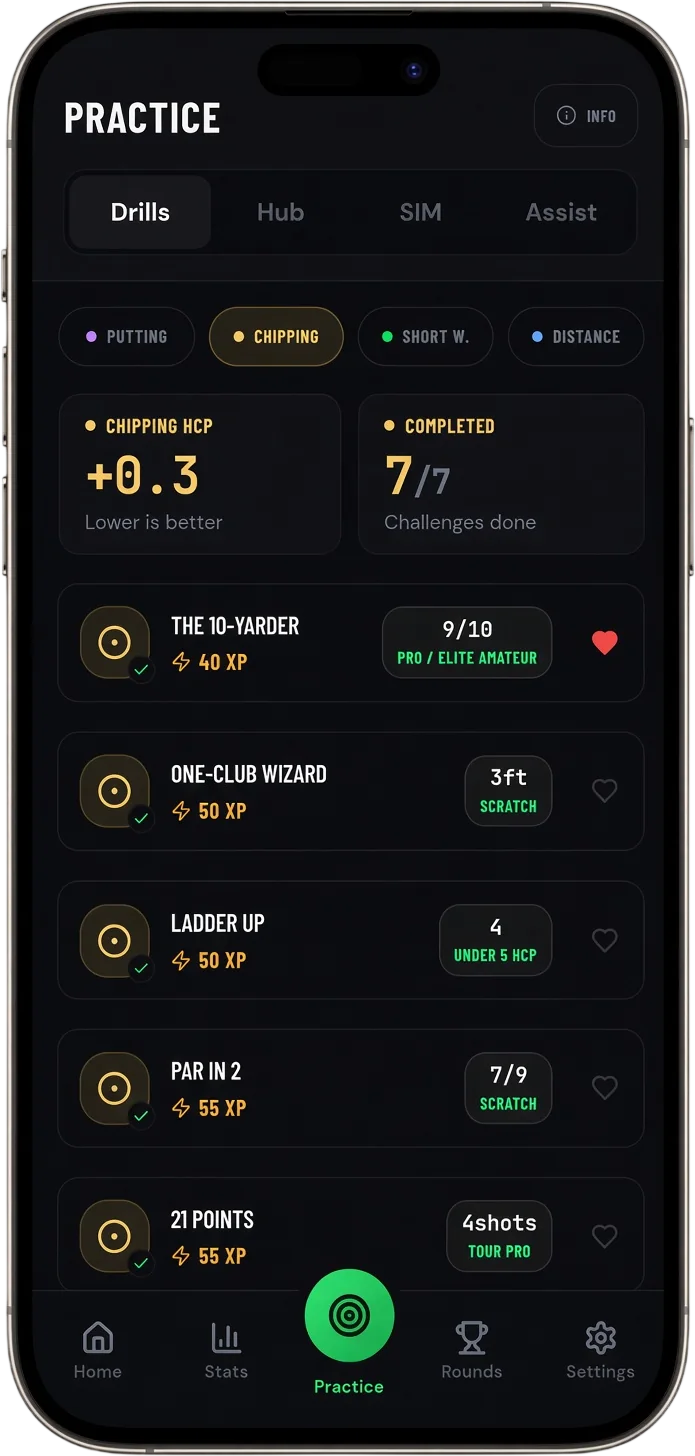
A drill-based app does the opposite. It scores every session, tracks your numbers across weeks, and tells you what to work on next. The same chipping practice you’d do with a net becomes a scored Ten Yarder challenge: 10 chips from 10 yards, count how many finish inside 3 feet, target a benchmark. The data builds session by session.
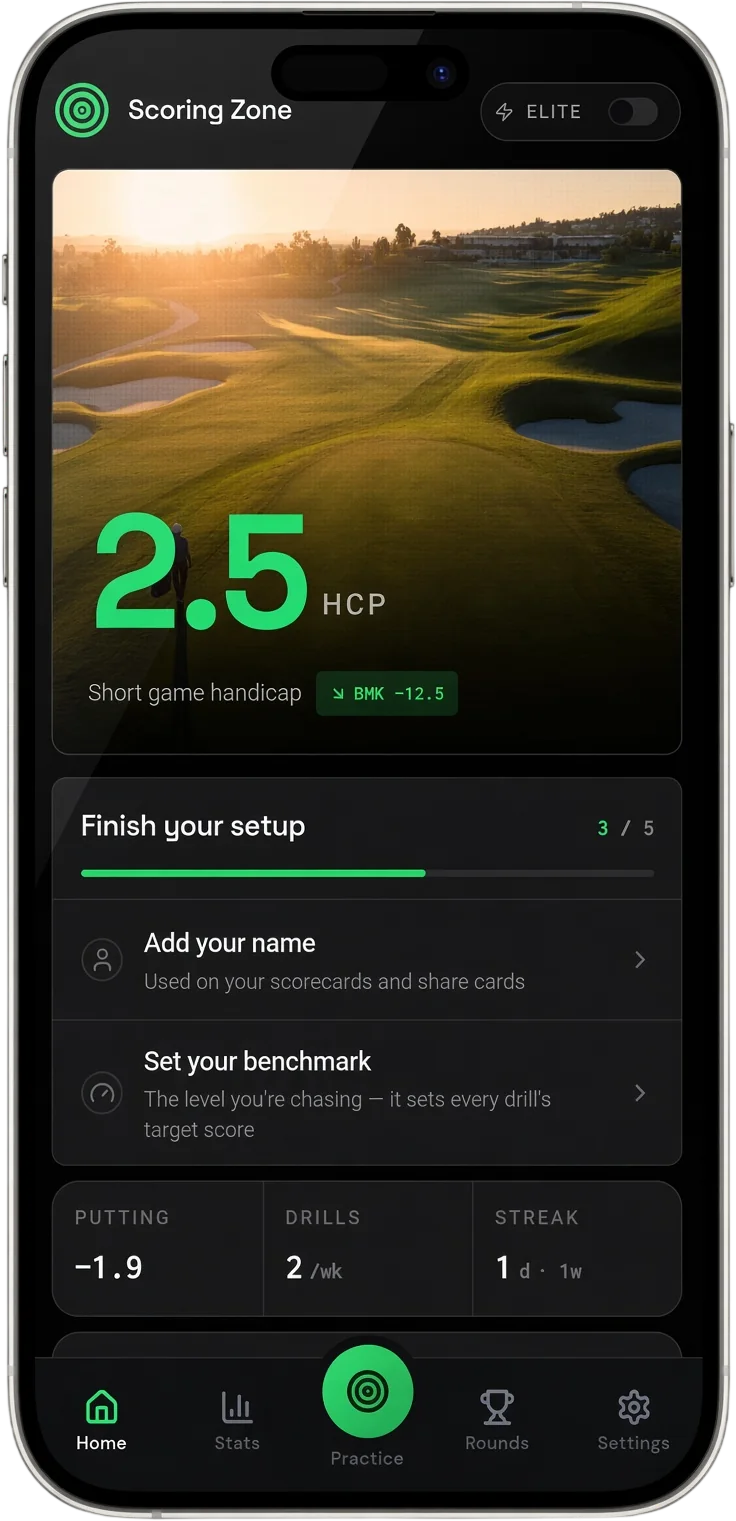
For short game in particular, this is where digital wins. Scoring Zone is built around scored chipping and putting drills with automatic tracking, which is the part most physical aids can’t do. The aid teaches the move; the app proves the move is sticking.
Build a session around your weakest area, with structured drills you can rerun any time.
See How It Works →1. What specific fault am I fixing? If you can’t name the fault, the aid won’t fix anything — you’ll just buy a different fault tomorrow. 2. Will I still use this in 30 days? If the answer is no, rent the lesson instead. 3. Does it score me? Aids that don’t measure progress can teach you a feel, but they can’t tell you whether you’ve improved.
If the aid passes all three questions, it’s worth the money. If it fails two of them, save the cash and book a coaching session.
See how your short game and putting trend over time across rounds and practice sessions.
Round Stats →The cheap, focused ones are — alignment sticks, an impact bag, a putting mirror, a PuttOut. They cost less than a single coaching session and fix specific faults. The expensive, single-purpose aids usually aren’t worth it: they fix one thing, then sit in the garage. The honest test is whether you’ll still use it in 30 days.
Alignment sticks. Every beginner mistake — bad alignment, ball position, swing path — gets exposed by two £15 sticks on the ground. Pair them with a putting mirror and you’ve covered the two most common faults under one budget.
Yes for putting and short game — putting mirrors, mats, impact bags and alignment sticks all work indoors. Full-swing aids generally need real ball flight to give meaningful feedback. For at-home practice, a putting mat plus a drill app is a far better setup than a wall full of swing aids.
Use it for one specific fault, score every session, and stop using it the moment your scores plateau. Aids work when they give feedback. The moment they stop teaching you anything new, they become a comfort blanket. Track your numbers — putts per round, up-and-down percentage, scored drill totals — and let the data tell you when to move on.
7 days free
Then from $4.99/month · Cancel anytime
Start your 7-day free trial
35+ drills & tests · Short Game Handicap · Performance tracking