Putting

How to Putt Better in Golf: 6 Fixes That Actually Work
Setup, stroke, speed and green reading
June 9, 2026 · 8 min read · Stephen Pickering
Setup, stroke, speed and green reading
June 9, 2026 · 8 min read · Stephen Pickering
Key takeaway: Putting is ~40% of your shots and the easiest motion in the game, yet amateurs average 36–40 putts a round versus a tour pro’s 29. You don’t need a new stroke — fix your setup, quiet your hands, train speed over line, and drill the short ones under pressure.
Putting is the most under-respected skill in golf. It’s around 40% of your shots, it’s the same swing every time, and it requires zero athleticism — yet most amateurs barely practise it. If you want to know how to putt better in golf, the honest answer is that you don’t need a new stroke. You need to fix a handful of small things and then practise them with a bit of structure.
Here’s the gap: a tour pro averages about 29 putts per round, the average amateur 36 to 40. That’s seven to ten shots, every round, on the easiest motion in the game. These six fixes — covering setup, stroke, speed and green reading — are where those shots are hiding.
Most aim problems start before you move the putter. Set up so your eyes sit directly over the ball or just inside it — drop a ball from the bridge of your nose and it should land on or just inside your golf ball. When your eyes are inside or outside that line, your brain sees the target line distorted and you push or pull putts without ever knowing why. This one change fixes more missed short putts than any stroke tip.
A reliable putting stroke is a rock of the shoulders, not a flick of the hands. Keep your wrists quiet and let your shoulders and arms swing the putter back and through like a pendulum. The handsy stroke works on the practice green and falls apart under pressure, because small muscles get twitchy when it matters. Quiet hands, steady tempo, same length back and through.
Good putting is mostly speed, not line. Get the pace right and a putt that misses still finishes tap-in close; get the pace wrong and even a perfect read leaves you a four-footer coming back. From long range, pick a spot a foot past the hole and roll the ball to die there. That “12 inches past” target turns three putts into two and is the single fastest way to lower your putt count.
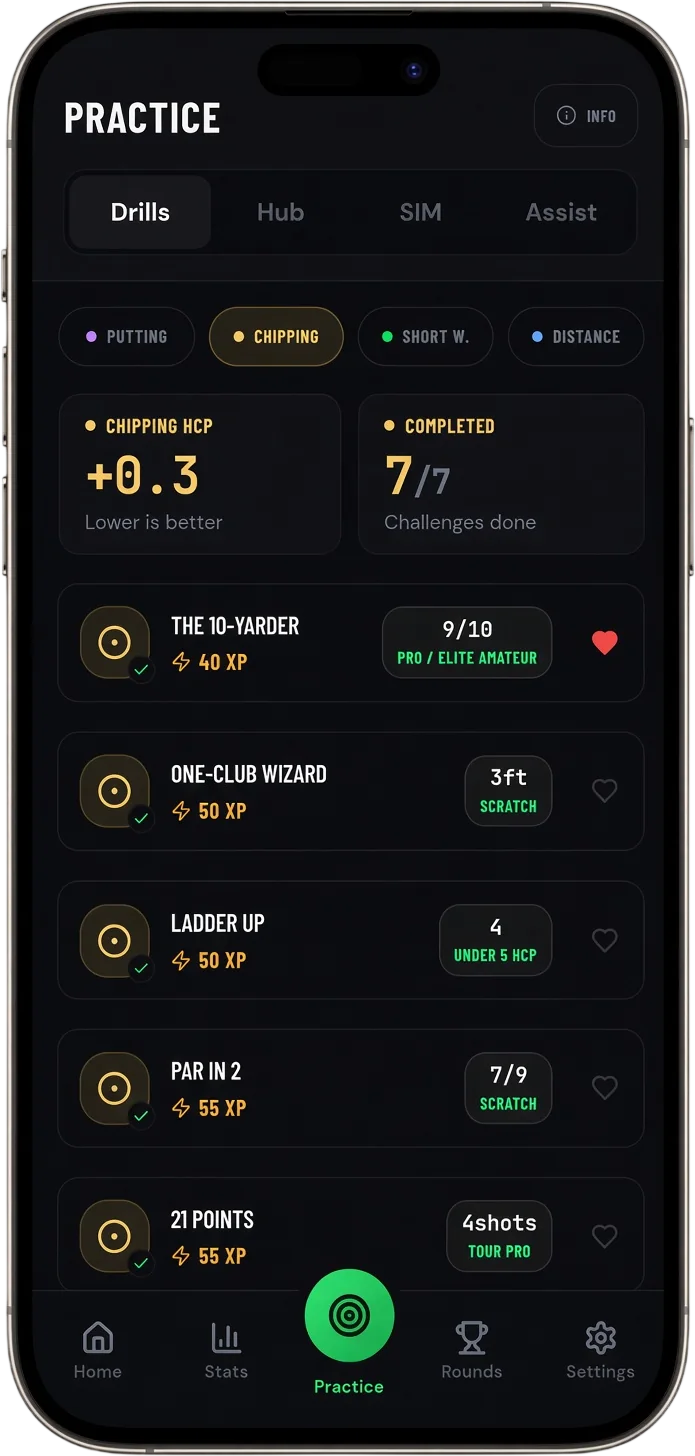
Speed isn’t a thought, it’s a calibration — and you build it by hitting putts to different distances back to back. Set up at 15, 30 and 45 feet and roll putts trying to stop each one inside a three-foot circle, not in the hole. Rotate the distances so your brain keeps recalibrating. Scoring Zone runs this as a scored challenge called Lag King and benchmarks the result against your handicap, so you find out whether your speed control is actually tour-amateur or weekend-amateur.
Speed control is a skill you can drill — here’s how to train it.
How to Improve Putting Distance Control →Read every putt from the low side — crouch behind the ball on the downhill side and you’ll see the slope far more clearly than from above. Pick your line, pick your speed, then commit. Most amateurs make a decent read and then second-guess it over the ball, which kills the stroke. A confident putt on a slightly wrong line beats a tentative putt on a perfect one almost every time.
From three feet, tour pros make 96%; from five feet it drops to 77%; from eight feet it’s a coin flip. The short ones decide your scorecard, so train them with consequence, not comfort. Drill a no-miss streak from three to six feet where one miss sends you back to zero — that pressure is what makes the practice transfer to the course. Practising putts you can already make in your sleep doesn’t move the needle; practising the ones that make your hands shake does.
Get a full putting assessment and your own Putting Handicap.
Performance Hub →The fastest single change is getting your eyes over the ball at address and focusing on speed instead of line. Set up so a ball dropped from your nose lands on your golf ball, then on every putt pick a target a foot past the hole and roll it to die there. That combination cleans up both your aim and your distance control in one session.
Usually it’s a handsy stroke and untrained speed. When the small muscles in your hands control the putter, your distance and start line vary putt to putt — especially under pressure. Quieten the hands so your shoulders run the stroke, and practise speed with a lag ladder, and the consistency follows.
Putting rewards short, frequent sessions over occasional long ones. Fifteen to twenty minutes a few times a week — split between a speed drill and a short-putt pressure drill — beats an hour once a fortnight. Because it’s the same motion every time, consistent reps build a feel that sticks.
A lag ladder for speed and a no-miss short-putt streak for nerve. The ladder trains the distance control that kills three putts, and the streak builds the pressure-proof stroke that holes the ones that matter. Track your putts per round over a few weeks and you’ll see exactly how much they’re worth.
7 days free
Then from $4.99/month · Cancel anytime
Start your 7-day free trial
35+ drills & tests · Short Game Handicap · Performance tracking