Putting
BirdieBall Putting Mat Review: Is It Worth It in 2026?
RollTech Foam, Real Prices, and the Stimp Problem Nobody Mentions
September 5, 2026 · 8 min read · Stephen Pickering
RollTech Foam, Real Prices, and the Stimp Problem Nobody Mentions
September 5, 2026 · 8 min read · Stephen Pickering
Key takeaway: BirdieBall is the best value in indoor putting surface area — four-foot widths let you play real breaking putts, and verified on the US store on 5 September 2026 a 4ft x 10ft is $184.99. But the RollTech surface rolls at roughly 12 on the stimpmeter against 9–10.5 on the greens you play. Use it for start line and short-putt pressure work; take your distance control outside.
Most putting mat reviews stop at “it rolls nicely”. The BirdieBall putting mat does roll nicely — that part is easy. The harder question is what happens when you take a stroke you built on a surface running 12 on the stimp out onto a members’ green running 9.
I have gone through the full range, the real prices, what independent testers found, and where it falls down. BirdieBall gets one big thing right that almost nobody else does, and gets one thing wrong that will quietly cost you putts if you do not know about it. Both are below.
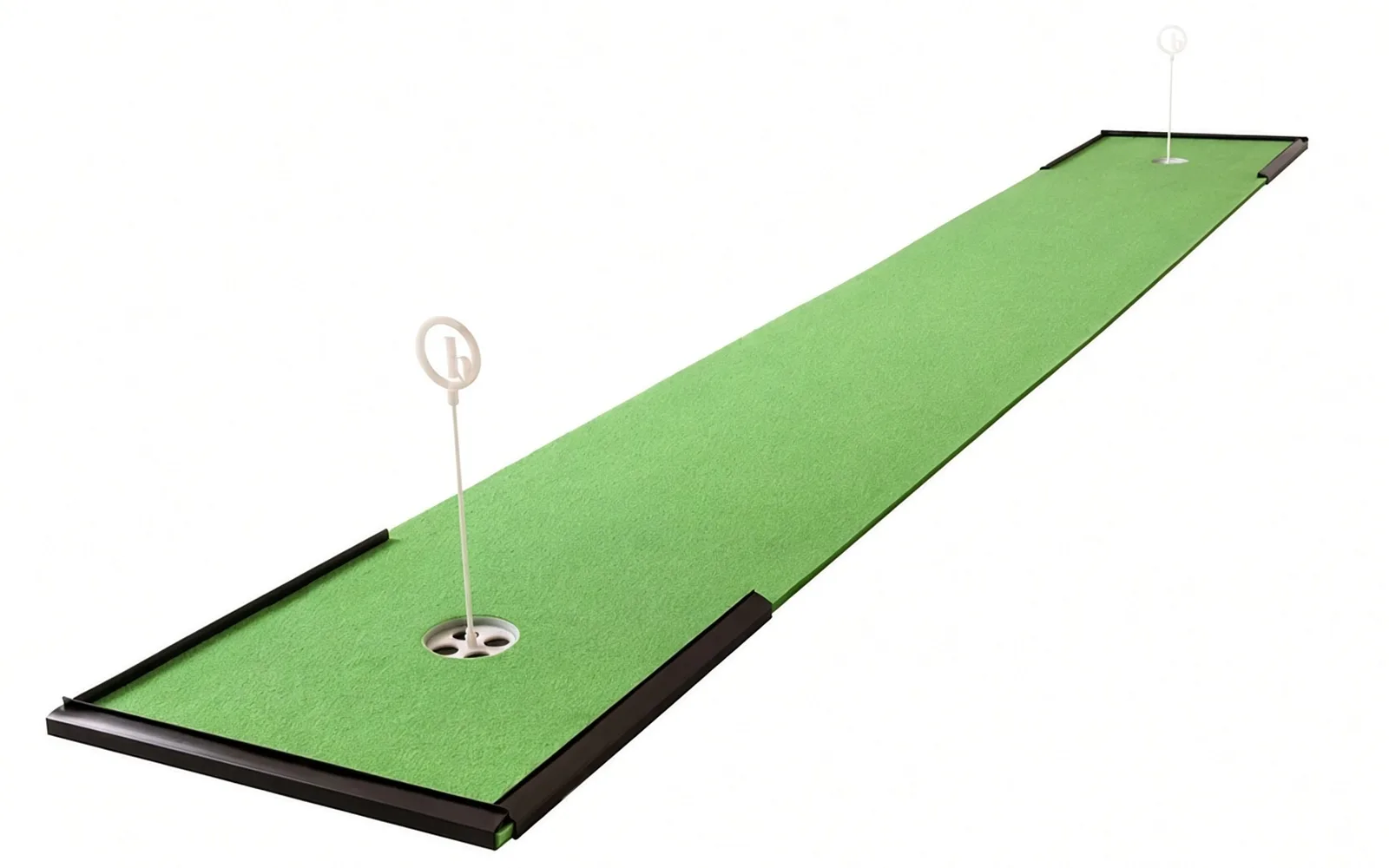
BirdieBall’s surface is a patented aerated foam they call RollTech, and the product is the roll, not the printing. There are no target zones, no gates, no distance markers. It is a large, flat, true surface that you unroll, putt on, and roll back up.
The thing they get right is width. Most indoor mats are a two-foot strip, which is fine for a straight ten-footer and useless for anything else — you cannot play a breaking putt on a surface narrower than the break. BirdieBall sells mats up to four feet wide and up to thirty feet long, and you can build one to the dimensions of your room. That is a genuinely different product to a strip of turf with a plastic cup at the end.
They also sell foam inserts that slide underneath to create slope, and cup reducers that shrink the target. Both are sensible additions to a surface that would otherwise offer one shot.
Checked on the BirdieBall US store on 5 September 2026:
Measure the room before you spend anything. A fourteen-foot mat needs fourteen feet plus somewhere to stand behind it, and that catches more people out than the price does.
For how BirdieBall compares against the other mats worth owning:
Best Putting Mat 2026: 5 Ranked →This is the part worth reading twice. Independent testing puts the RollTech surface at around 12 or faster on the stimpmeter. The greens most of us actually play run somewhere between 9 and 10.5, and a wet Tuesday in February is slower still.
Practise all winter on a 12 and you are training a stroke calibrated to a surface you will never putt on. Every putt you learn to die at the hole indoors finishes two or three feet short outdoors. You come out in spring convinced you have putted badly when what you have actually done is groove the wrong pace.
That does not make the mat useless. It makes it a start-line and stroke tool, not a speed tool. Use it for gate work, face control, the three-to-six-foot make percentage — the things that do not depend on green speed. Do your distance control on a real green, where the feedback is honest.
The skill the mat cannot teach you, and where most three-putts come from:
How to Improve Putting Distance Control →Reviewers who have lived with one raise three more things, and they are fair:
The surface feels soft and bouncy. It is foam. It rolls true, but it does not feel like grass under the ball, and a putt struck slightly heavy behaves differently to how it would on a green.
The cups are shallow. Good putts bounce out or lip out instead of dropping. That is worse than it sounds, because the whole value of a hole is a clean binary — made or missed — and a cup that rejects a well-struck putt corrupts the only feedback you have. Cup reducers help, in that a smaller target makes the near misses obvious.
The breaks are artificial. The foam inserts create slope in a step rather than a curve. Better than a flat surface, not the same as reading a real green.
You have a room and you want to use the width of it. You want to practise breaking putts indoors, which almost no other mat at this price allows. You have a family and the mat will get used for fun as well as work. You want something you can roll up and put away without a fight.
At $184.99 for four feet by ten, BirdieBall is a lot of usable surface for the money, and the build-your-own option is genuinely rare.
You are preparing for competition and you need pace that transfers. You want the mat itself to tell you what to practise — BirdieBall gives you a surface and nothing else, which is the opposite trade to a printed training mat. And if you only ever hit straight ten-footers while the television is on, the $99.99 two-footer is the honest recommendation and you can stop reading.
The printed alternative, and the opposite trade-off:
Wellputt Mat Review: Is It Worth It in 2026? →Here is the thing that applies to every mat, BirdieBall included. A surface does not improve you. A scored task does.
Rolling two hundred putts at a foam cup feels productive and leaves no evidence behind. Rolling ten putts from five feet where a miss resets your streak to zero, and writing the number down, is practice — because now there is a result, and next week’s result can be better or worse than this week’s. That is the whole mechanism.
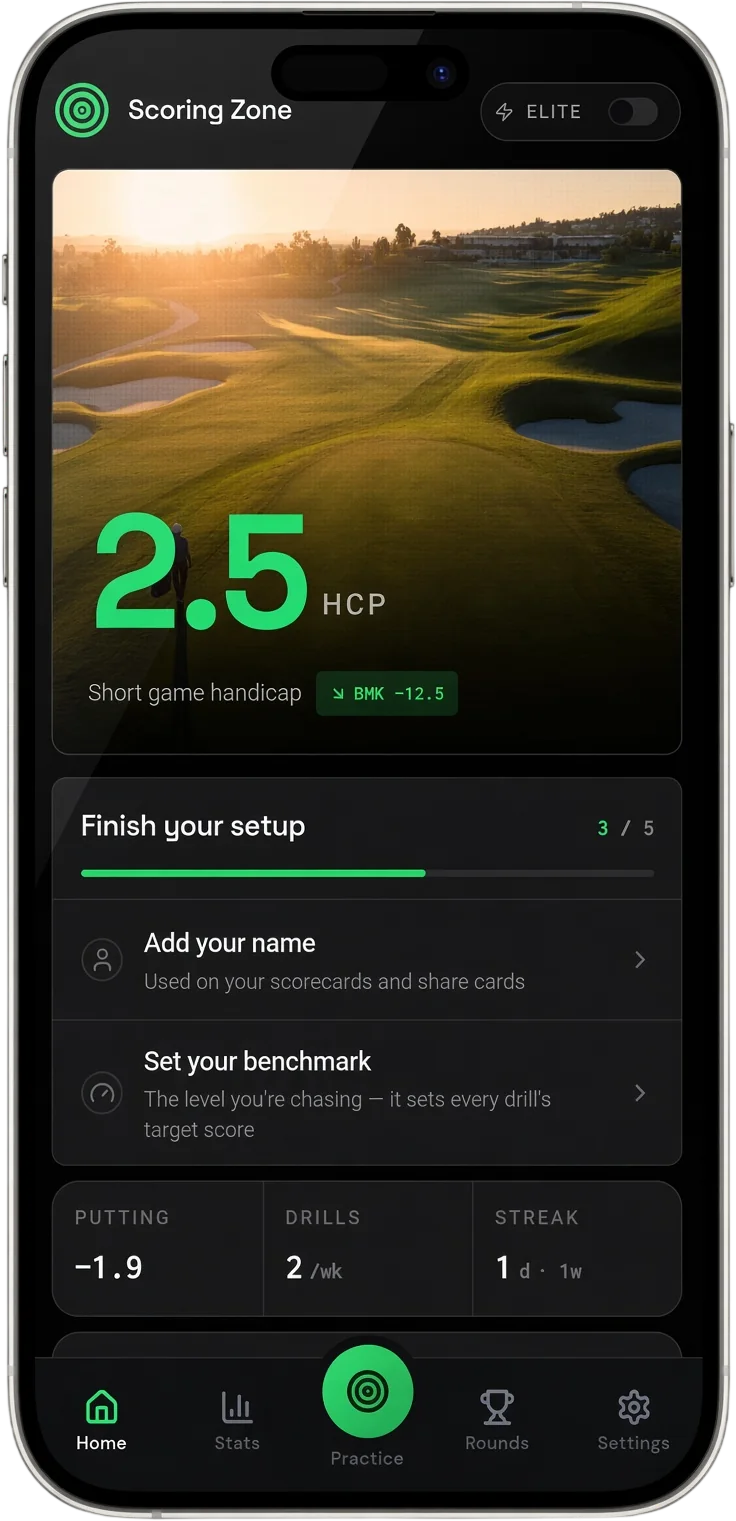
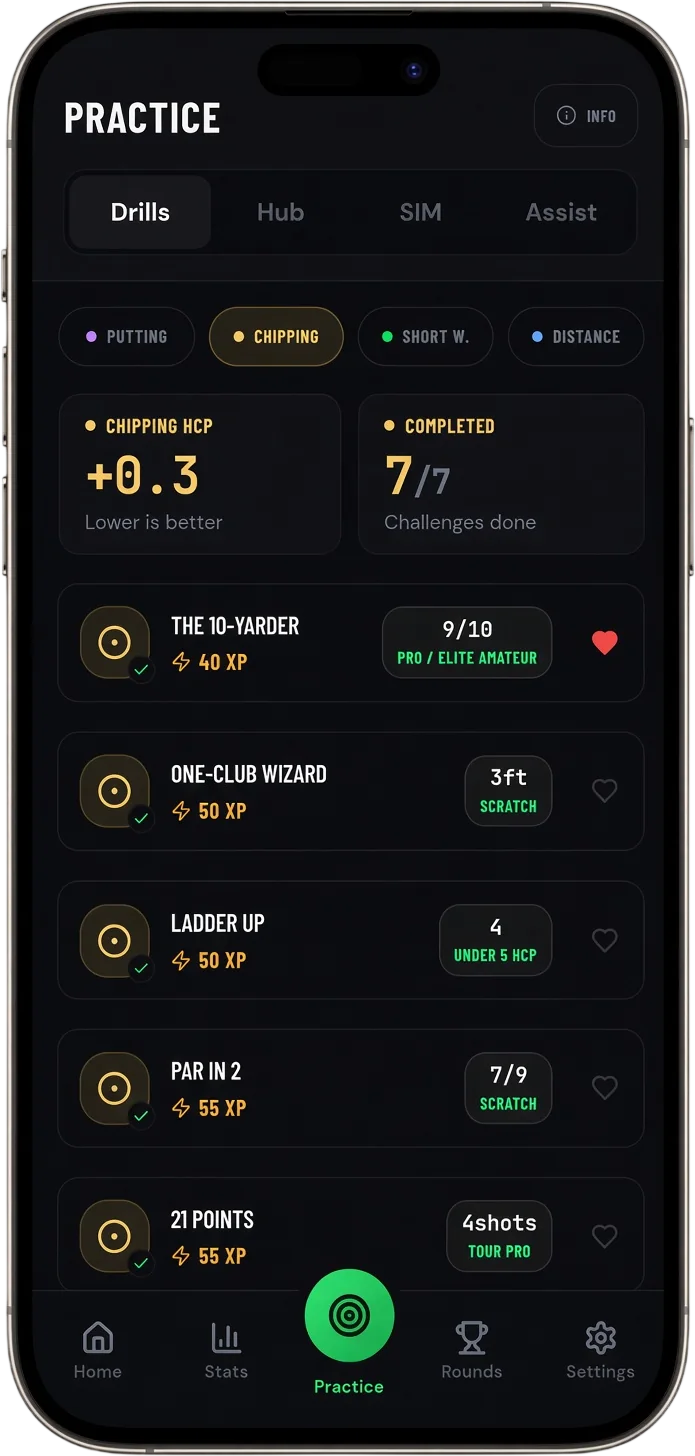
Scoring Zone exists to put that number on the end of the session. The Clutch Putt Challenge is a pressure test from three to six feet; the Five-Foot Circle asks for ten in a row and sends you back to zero on a miss. Both work on a mat, both give you a score, and both mean February’s practice can be compared to March’s.
Structured indoor sessions that work on any surface:
How to Practice Putting at Home →BirdieBall is the best value in indoor putting surface area, and the four-foot widths let you do something almost no rival allows at the price. Buy it for start line, face control and short-putt pressure work, and buy it in the widest size your room will take.
Just do not build your speed on it. Know that you are training on a 12 and playing on a 9, and take your distance control outside. Get that one thing right and it is a good mat. Get it wrong and it is an expensive way to leave putts short all summer.
And whichever mat you land on, give the session a number at the end of it. Scoring Zone’s Putting Handicap is built from exactly that — scored drills, recorded over time, so you can see whether the winter actually worked instead of guessing.
If you want a large, true-rolling surface you can size to your room and roll away afterwards, yes. The RollTech foam is genuinely good and you can buy a four-foot-wide mat for less than some brands charge for a two-foot strip. What you are not buying is structure — there are no printed targets, gates or distance markers, so the practice plan has to come from you.
Checked on the BirdieBall US store on 5 September 2026: the 2ft x 10ft Standard is $99.99, the 2ft x 12ft $155.99, the 4ft x 10ft $184.99 and the 4ft x 14ft Deluxe $293.99. The Ultimate package spanning 4ft x 10ft to 4ft x 18ft was $347.99 on sale, and a build-your-own mat starts at $90. Prices move with promotions, so check before you buy.
Independent testing puts the RollTech surface at roughly 12 or faster on the stimpmeter, against 9 to 10.5 on most courses you play. That is the single most important thing to know about it. Putts that die at the hole indoors finish well short outdoors, so use the mat for start line and short-putt work and do your speed practice on a real green.
Put a score on the session. Pick one task — ten from five feet with a miss resetting the streak, or eight around a six-foot circle without a miss — record the number, and compare it next week. A surface cannot tell you whether you are getting better; a tracked score can, and it is the only thing that turns winter reps into fewer putts in April.
7 days free
Then from $4.99/month · Cancel anytime
Start your 7-day free trial
35+ drills & tests · Short Game Handicap · Performance tracking