App Reviews

Strokes Gained App: Best Tools for 2026 (And What They Don’t Fix)
Diagnosis vs improvement — what each app actually does
May 3, 2026 · 8 min read · Stephen Pickering
Diagnosis vs improvement — what each app actually does
May 3, 2026 · 8 min read · Stephen Pickering
Key takeaway: Strokes gained tells you where you’re losing shots versus a benchmark — tour, scratch, or your own handicap. On-course apps like Arccos and Shot Scope handle the tracking. Practice-side apps like Scoring Zone connect that diagnosis to drills that close the gap. The number is the start, not the answer.
Strokes gained is the cleanest way to measure where you’re losing shots. It compares every swing you take to the average expected score from that distance and lie, then tells you — in numbers — whether you gained or lost shots versus your benchmark. No guessing, no “I felt like I putted poorly”. Just shots saved or shots given away.
A good strokes gained app turns four or five rounds of data into a clear picture: are you bleeding shots off the tee, on approach, around the green, or with the putter? That’s the question every other practice decision should follow.
But the apps that calculate strokes gained on the course don’t help you fix what they show. The number is the start, not the answer.
Mark Broadie’s strokes gained model — the one every modern golf app uses — works on a simple idea. From any distance and lie, there’s an average number of shots a benchmark golfer takes to finish the hole. From 150 yards in the fairway, scratch averages roughly 2.9 shots to hole out. From the same spot in the rough, 3.1.
If you hit a 6-iron from 150 yards to 12 feet, the new average from 12 feet is around 1.8. So you took 1 shot, and the expected hole-out dropped from 2.9 to 1.8 — meaning that shot was worth roughly 0.1 strokes gained on approach.
Across a round, those 0.1s add up. The app sums them by category — off the tee, approach, around the green, putting — and tells you where the round was won or lost.
- Off the Tee (SG: OTT) — drives and tee shots on par 4s and par 5s - Approach (SG: APP) — second shots into greens - Around the Green (SG: ARG) — chips, pitches, bunker shots within ~30 yards - Putting (SG: PUTT) — every putt on the green
For amateurs, approach is usually the biggest leak. Most golfers think putting is the problem because that’s where missed shots feel most painful — but the strokes gained data almost always tells a different story.
Two flavours of strokes gained app exist. They solve different problems.
These pair sensors or watches with GPS to detect every shot automatically. You play the round normally, the app records distances, lies, and outcomes. After the round you get a strokes gained breakdown.
The strength is automation — you don’t have to remember anything. The weakness is the price of entry (Arccos sensors run ~£300 a year on subscription, Shot Scope hardware is one-off but limited) and the fact that none of them have a meaningful practice side. They tell you you’re losing 1.2 shots a round on approach. They don’t help you fix it.
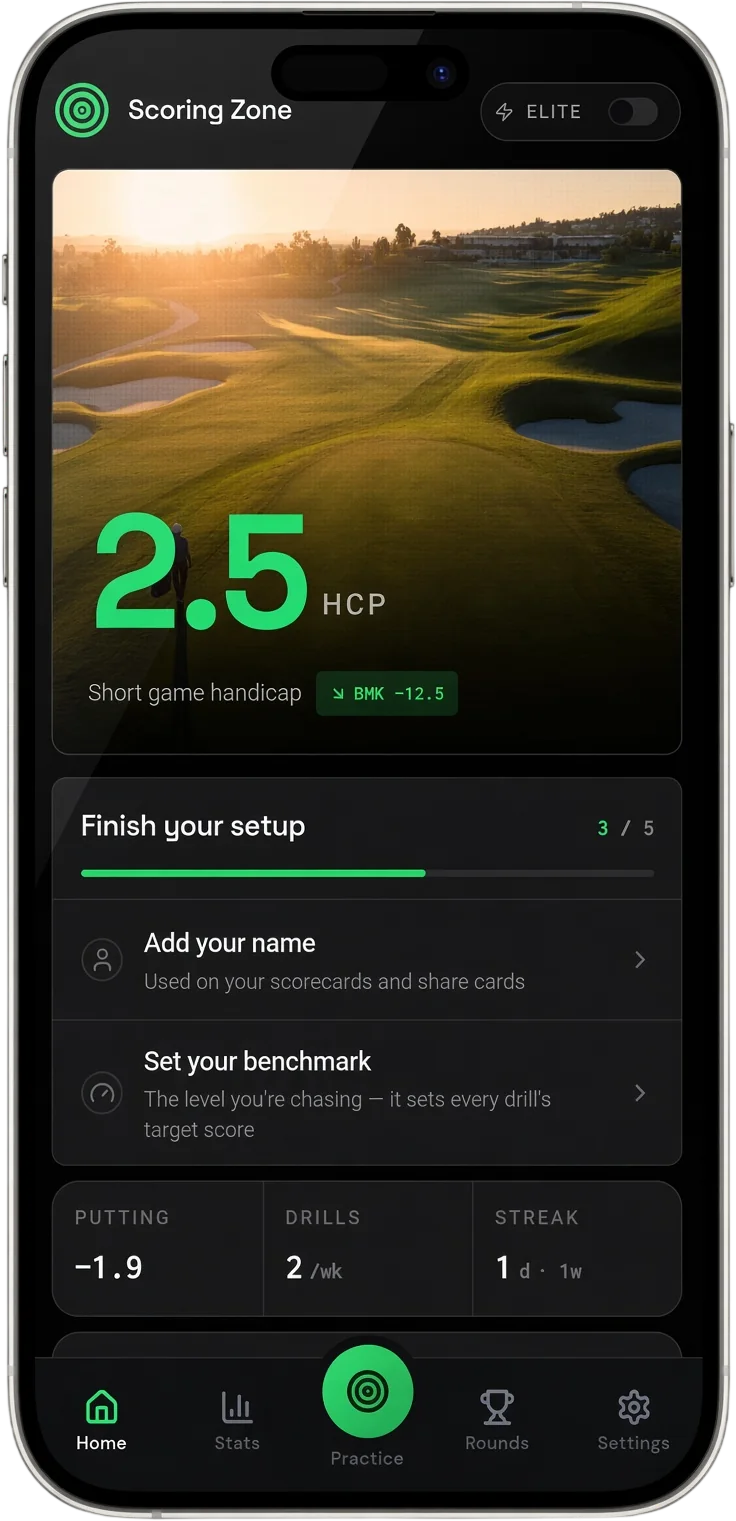
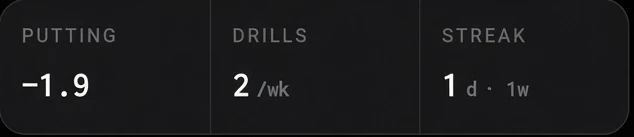
The other side of the coin. Instead of capturing every on-course shot, these apps measure your skill in controlled drills — a 60-shot short game performance test, lag putting from various distances, scrambling from rough/fairway/bunker. The result is a Short Game Handicap and Putting Handicap that benchmark you against players in your bracket, plus drill-specific scores you can retest.
Scoring Zone’s Elite Mode unlocks strokes gained analysis on round entry, so you get tour-style benchmarking against your handicap once you’ve entered two rounds.
The full skill assessment is built around the Performance Hub:
Performance Hub →Picking depends on what you actually want — diagnosis or improvement.
The most refined data in the category. Arccos Caddie tracks every shot via sensors in your grips and gives you strokes gained vs scratch, vs your handicap, and vs the tour. £140-ish for the sensors plus annual subscription. If you only ever play and never want to practise structured drills, this is the cleanest tracker.
Cheaper hardware (£250-ish for the watch, no subscription required for basic stats). Strokes gained breakdown is solid, the dashboard is less polished than Arccos but the price gap is significant. Same trade-off applies — it tells you where shots leak, doesn’t help you patch the leak.
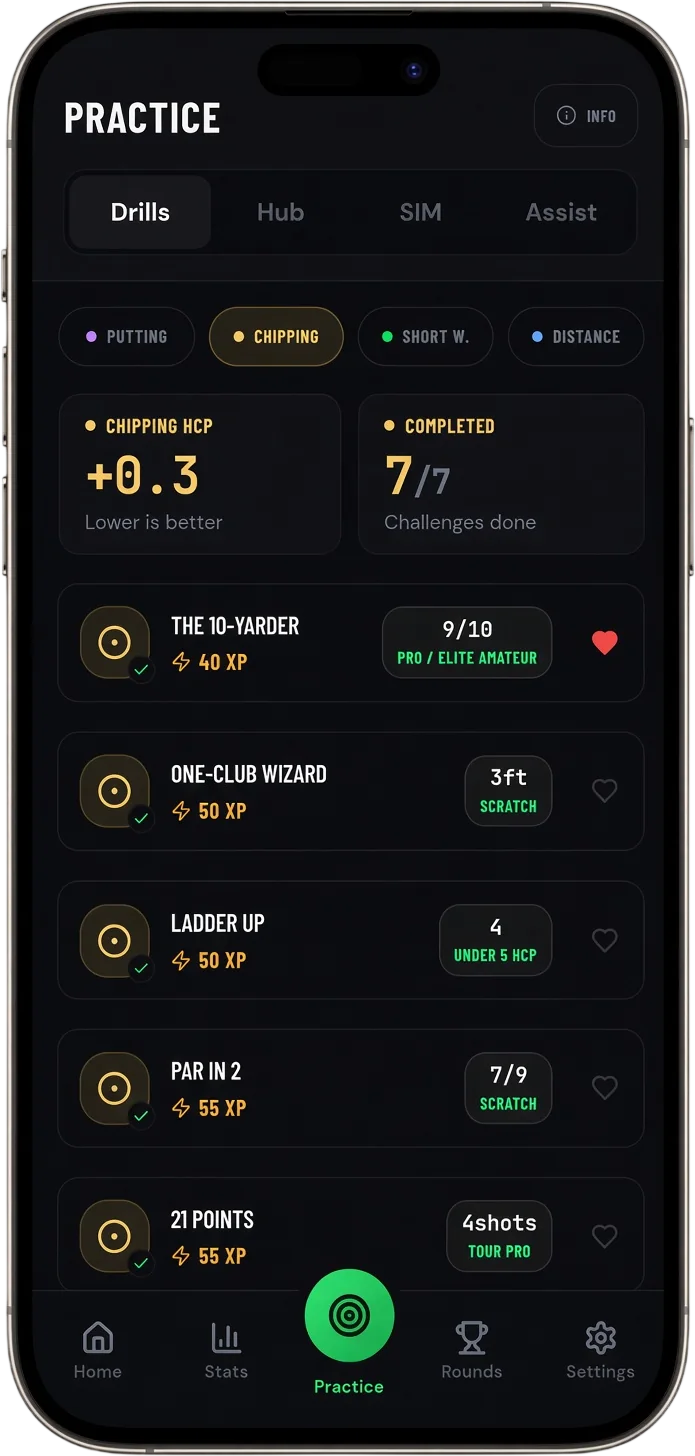
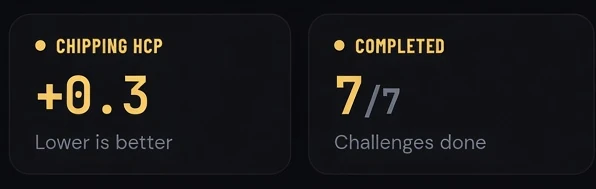
The Performance Hub assessment generates a Short Game Handicap and Putting Handicap from a 60-shot test. Each section connects directly to the drills that train it — chipping ladders, pressure putting, up-and-down challenges from rough, fairway, and bunker. Strokes gained on round entry comes through Elite Mode once you cross the XP threshold.
See the strokes gained methodology and how amateurs use it:
Golf Strokes Gained Explained →A strokes gained number on its own changes nothing. The question that matters is: what do I do on Tuesday after seeing it?
The answer should be specific. If approach is bleeding 1.2 shots a round, the practice that week is wedge ladders and 7-iron shot dispersion — not a bucket of drivers. If putting is the leak, lag putting and three-footers under pressure. If short game scrambling is the gap, drills from rough, sand, and tight lies.
The on-course apps don’t connect that dot. They give you the diagnosis and stop. The practice apps give you the diagnosis plus the workout. For most golfers — especially anyone trying to drop from a 15 to a 10 — the practice side moves the needle faster than the tracking side.
A strokes gained app compares each shot you hit to the average expected outcome from that distance and lie, then tells you whether you gained or lost shots versus a benchmark — usually scratch or PGA Tour average. It turns “I felt like I putted badly” into a number you can act on.
Both calculate strokes gained off automatic shot detection, and both are solid for on-course tracking. Arccos has more refined data, Shot Scope has the cheaper hardware. Neither helps you fix the leak between rounds — that’s where a practice-side app sits.
Yes — Scoring Zone calculates strokes gained against your handicap on the 7-day free trial. Manual round entry takes about three minutes per round and unlocks the full breakdown.
Approach for most amateurs — it accounts for roughly 40% of the scoring gap to scratch. Putting is overrated as a leak; you’ll find the bigger shots inside 100 yards. Run an assessment, then practise the category that bleeds the most.
7 days free
Then from $4.99/month · Cancel anytime
Start your 7-day free trial
35+ drills & tests · Short Game Handicap · Performance tracking