Practice & Improvement
How to stop three putting
Stop trying to hole the long ones

Stop trying to hole the long ones
Key takeaway: Most three-putts start with a long first putt that finishes too far away. From beyond 25 feet, mid-handicappers three-putt about one time in four, against fewer than one in ten for tour players. Stop practising long putts to hole them. Practise leaving them inside three feet, and score every one.
From 20 to 25 feet, PGA Tour players hole just over 12% of their putts. That’s about one in eight. The best putters in the world, on greens running like glass, and they miss seven out of every eight.
So why do so many club golfers spend their practice time rolling 30-footers at the hole, trying to make them?
I was one of them. [Stephen: what your practice-green routine used to look like, and how long you spent on long putts.] It felt like good practice. It did nothing for my scores.
Your long putts aren’t costing you shots because they miss. Everybody misses. They cost you shots because the next putt is too long.
So stop practising to hole them. Practise leaving them inside three feet instead. It’s a different drill with a different target, and it’s the one that shows up on your card.
Three-putts start a long way from the hole. In the 2021 season, tour players three-putted 2.26% of the time from 20 to 25 feet. From 25 feet and beyond, that jumped to 9.56%.
Club golfers three-putt far more often from long range. When Arccos compared its players with the tour, the three-putt rate from 25 feet and beyond looked like this:
| Golfer | Three-putt rate from 25+ feet |
|---|---|
| PGA Tour | 9.46% |
| 1–5 handicap | 19.61% |
| 6–10 handicap | 25.59% |
| 11–15 handicap | 26.90% |
A mid-handicapper three-putts roughly one long putt in four. Over a full round, the same Arccos data had 1–5 handicaps averaging 1.6 three-putts and 15-plus handicaps averaging 3.2.
Two honest caveats. That Arccos study was published in 2017, so treat the exact figures as a guide rather than gospel. And some of the gap isn’t putting at all. Higher handicaps hit their approaches further from the flag, so they face more long putts in the first place. You can’t fix that on the putting green. You can fix what happens once you’re there.
Think about what a 30-footer at the hole actually teaches you. You get one piece of feedback: in or out. It’s nearly always out, so you learn very little from it.
Worse, chasing the hole changes your speed. When you’re trying to make it, you hit it firmer. On the practice green that feels positive. On the course it’s the putt that runs six feet by and leaves you a nervy one coming back.
The target is wrong. The hole is four and a quarter inches wide. A three-foot circle around it is six feet across. Aim your practice at the bigger target and every putt tells you something: inside the circle or not, short or long, and by how much.
Hit 10 putts from 30 feet or more. Count how many finish within three feet of the hole. Forget the line. This is speed only.
The benchmarks we use in Scoring Zone are 8 out of 10 for a scratch golfer, 5 for a 9 handicap, 4 for a 15 handicap and 3 for an 18 handicap. If you’re well short of your number, you’ve found where your three-putts are coming from.
Five balls to the same hole from 25 feet. Score each one:
Add it up out of 15. Notice that short scores nothing. That’s deliberate. A putt that never reaches the hole has no chance of going in, and it trains you to be scared of the speed you actually need.
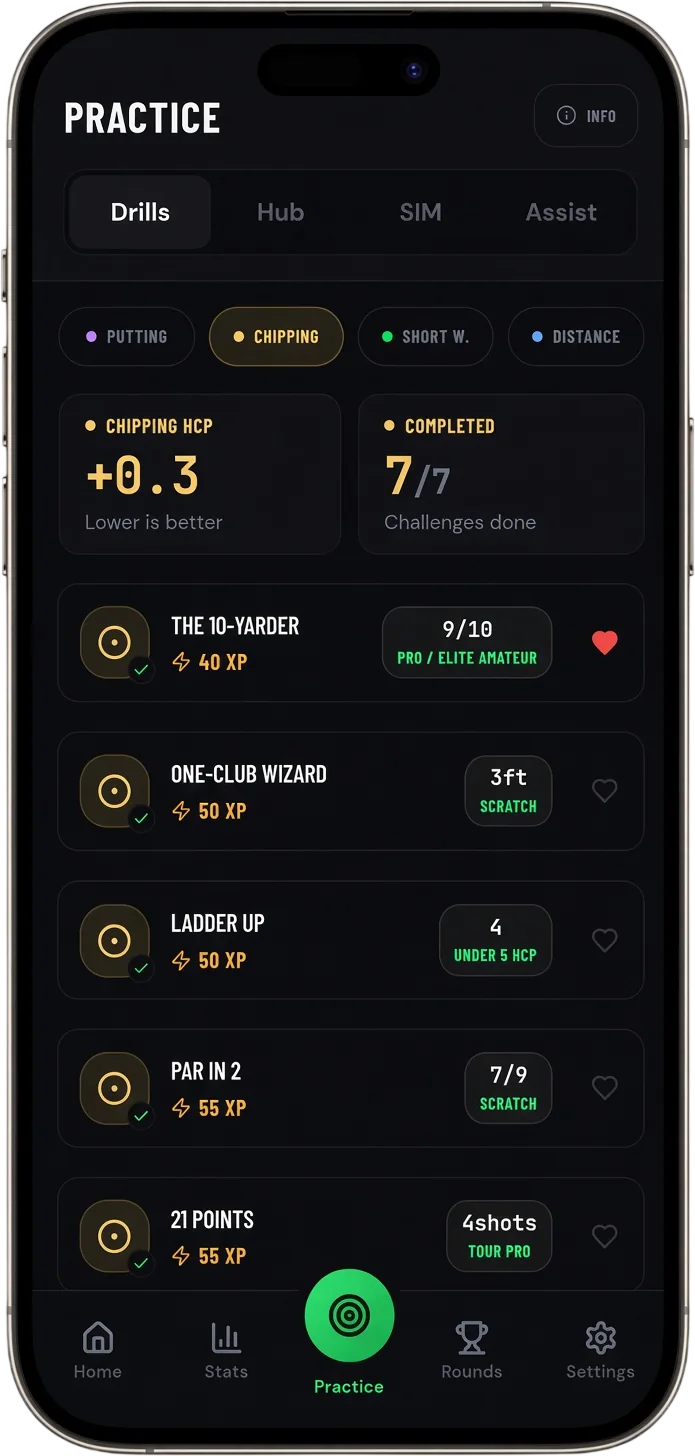
Both drills are in the app, scored against your handicap.
See Putting Drills →You don’t need an hour. You need a plan and a score.
Do it twice a week for a month and write the scores down every time. [Stephen: optional, one line on what happened to your own Lag King score when you practised this way, only if true.]
Count your three-putts. Not putts per round, which can go up when you hit more greens, because you’re putting from further away. Three-putts per round tells you directly whether your lag putting has improved.
Use the Arccos numbers above as a rough guide: about 1.6 a round for a low single-figure golfer, 3.2 for a 15-plus handicap. If you’re above your band, this is where your shots are hiding.
Scoring Zone has both drills built in, with benchmarks for your handicap, so you can see the trend over weeks instead of guessing. A notebook works too, honestly. What matters is that you write it down.
You’re never going to hole most of your 30-footers. Nobody does. But you can stop handing shots back after them.
Stephen
Track three-putts per round and see the trend.
Round Stats →Mostly speed on long first putts. From 25 feet and beyond, an 11–15 handicapper three-putts about one time in four, according to Arccos data, against fewer than one in ten for tour players. Get the first putt closer and the second putt gets easier.
Arccos found 1–5 handicaps averaged 1.6 three-putts per round and 15-plus handicaps averaged 3.2. The study was published in 2017, so use it as a rough guide.
Yes, but for speed. Stop judging them by whether they go in and judge them by how close they finish. A three-foot circle around the hole is a far better target than the hole itself.
Any drill that scores where your long putts finish. Lag King, ten putts from 30 feet or more counting how many finish inside three feet, is the simplest. Speed Master adds a penalty for leaving it short.
Read the complete guide to improving your putting.
The Complete Putting Guide →7 days free
Then from $4.99/month · Cancel anytime
Start your 7-day free trial
35+ drills & tests · Short Game Handicap · Performance tracking